How to Tell If a Tree Is Structurally Unsafe
How to Tell If a Tree Is Structurally Unsafe
Trees are one of the most valuable features on any residential property. They provide shade during Michigan's warm summers, improve curb appeal, increase property value, and create a beautiful outdoor environment. However, even healthy-looking trees can develop structural weaknesses that make them dangerous.
Many homeowners assume that a tree is healthy simply because it has green leaves each spring. Unfortunately, a tree's appearance can be misleading. Serious structural problems often develop inside the trunk or below the soil long before visible symptoms appear. By the time obvious warning signs become noticeable, the tree may already present a significant safety risk.
Every year throughout Michigan, severe weather causes structurally compromised trees to fail. Falling trees and large limbs damage homes, garages, vehicles, fences, and utility lines while placing people and pets at risk of serious injury.
Learning to recognize the warning signs allows homeowners to address problems before they become emergencies.
This guide explains the most common structural defects found in residential trees, what causes them, and when professional removal should be considered.
What Makes a Tree Structurally Unsafe?
A structurally unsafe tree has weaknesses that increase the likelihood of partial or complete failure.
These weaknesses may affect:
- The root system
- The trunk
- Major scaffold branches
- Branch attachments
- Internal wood strength
A tree does not need to be dead to become dangerous. In fact, many hazardous trees are still actively producing leaves while significant internal decay continues unseen.
Root Problems Often Go Unnoticed
Roots are responsible for anchoring the entire tree.
When the root system begins failing, the rest of the tree becomes unstable regardless of how healthy the canopy appears.
Warning signs include:
- Soil lifting around one side of the trunk
- New leaning after storms
- Exposed roots breaking at the surface
- Mushrooms growing near the base
- Cracks in the soil around the trunk
Construction work can also damage roots.
Excavation for patios, driveways, utility lines or additions frequently cuts major structural roots. The tree may survive for years before suddenly failing during a windstorm.
Large Cracks in the Trunk
Deep vertical cracks are among the most serious structural concerns.
Cracks often develop because of:
- Lightning strikes
- Wind stress
- Internal decay
- Heavy branch weight
- Freeze and thaw cycles
Not every crack requires removal, but large cracks extending deep into the trunk should always be professionally evaluated.
As cracks widen, the tree loses much of its structural integrity.
Multiple Trunks Can Become Hazardous
Many ornamental trees naturally develop two or more trunks.
This is known as a codominant stem.
Although attractive, these trunks frequently create weak attachment points.
As the tree grows:
- Pressure increases between stems
- Bark becomes trapped
- The connection weakens
- Splitting becomes more likely
Ice storms are particularly hard on codominant trees because snow weight increases stress dramatically.
Included Bark Is a Serious Structural Defect
Included bark occurs when bark becomes trapped between two growing branches.
Instead of wood joining together naturally, bark forms a wedge that prevents a strong connection.
As the tree grows larger:
- The attachment weakens
- Cracks develop
- Large limbs split apart unexpectedly
Included bark is one of the most common reasons mature shade trees lose major limbs during storms.
Hollow Trees Are Not Always Safe
Many homeowners assume a hollow tree is harmless because it has survived for years.
While some hollow trees remain standing for decades, others become extremely dangerous.
The amount of solid wood remaining determines overall strength.
Large cavities reduce the trunk's ability to support:
- Heavy branches
- Snow loads
- High winds
If more than one-third of the trunk has decayed, removal often becomes the safest option.
Dead Branches Increase Risk
Dead branches eventually lose moisture and become brittle.
These limbs can fall:
- During storms
- During light winds
- Under snow accumulation
- Even on calm days
Dead branches are especially dangerous over:
- Homes
- Play areas
- Driveways
- Sidewalks
- Decks
Regular inspections help identify deadwood before it becomes hazardous.
Leaning Trees
Not every leaning tree is dangerous.
Some trees naturally grow at an angle throughout their lives.
However, sudden leaning is different.
If a tree recently began leaning, especially after severe weather, it may indicate root failure.
Signs that a leaning tree is becoming unstable include:
- Fresh soil movement
- Root plate lifting
- Cracked ground
- Exposed roots
- New gaps beneath the trunk
These trees should be inspected immediately.
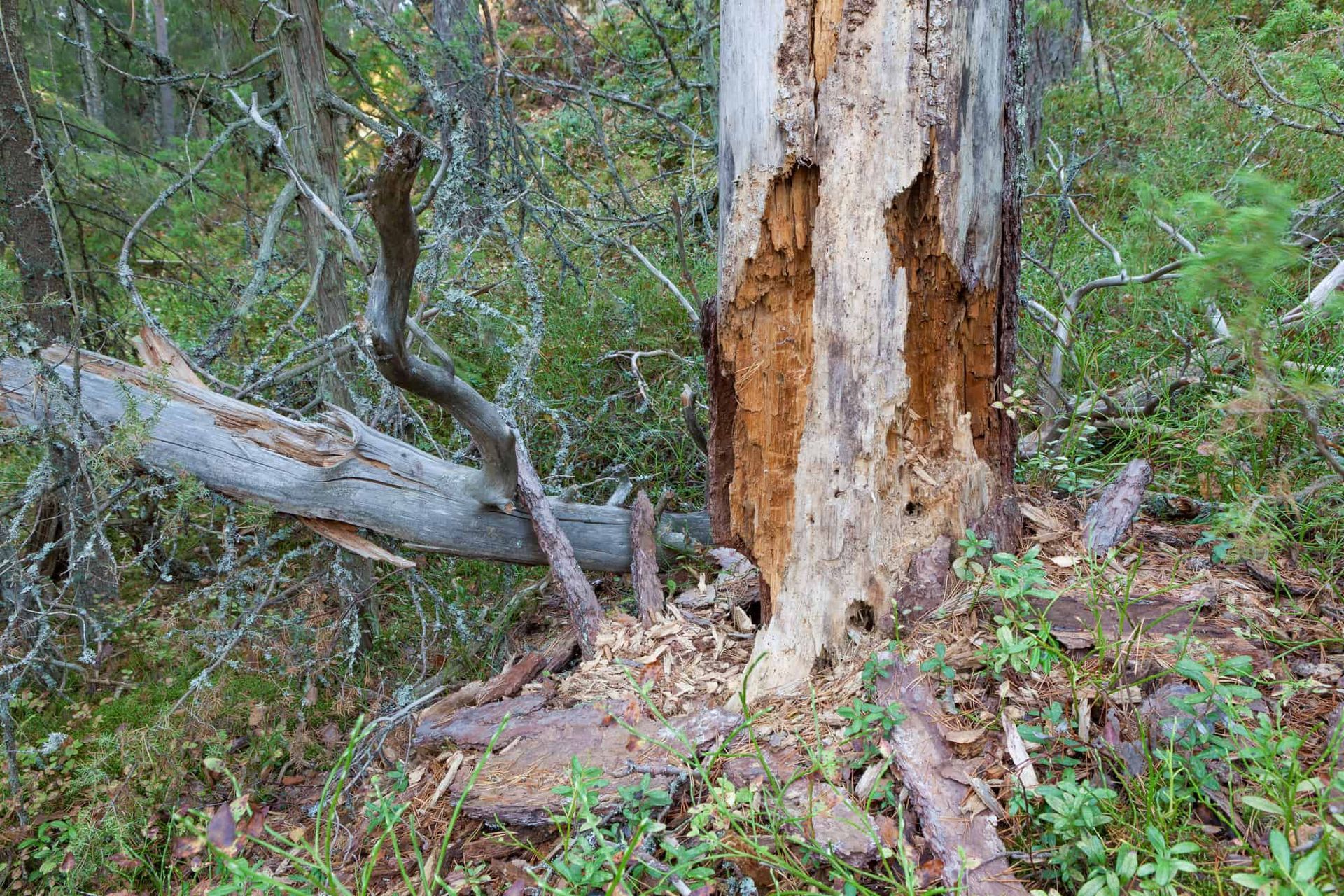
Signs of Internal Decay
Internal decay cannot always be seen from the outside.
Common indicators include:
- Mushrooms growing from the trunk
- Hollow sounds when tapped
- Carpenter ants
- Woodpecker activity
- Large cavities
- Soft wood
- Falling bark
Decay reduces strength while allowing the tree to continue producing leaves.
This is why visual appearance alone cannot determine structural safety.
Storm Damage Weakens Trees
Michigan storms regularly expose hidden weaknesses.
Strong winds can:
- Twist trunks
- Crack branch unions
- Damage roots
- Split large limbs
Even if a tree remains standing after a storm, hidden damage may continue worsening over the following months.
Professional inspections after major storms are strongly recommended.
Ice and Snow Increase Structural Stress
Heavy snow places tremendous weight on branches.
Ice storms are even more damaging.
Ice accumulation adds hundreds of pounds to mature limbs.
Trees with:
- Poor branch structure
- Included bark
- Existing cracks
- Internal decay
are far more likely to fail during winter weather.
Tree Species More Likely to Develop Structural Problems
Certain species commonly found throughout Macomb County require closer monitoring.
These include:
Silver Maple
Fast-growing with brittle wood and shallow roots.
Bradford Pear
Known for weak branch attachments that split as trees mature.
Willow
Rapid growth creates heavy limbs prone to failure.
Boxelder
Often develops multiple trunks and weak branch unions.
Cottonwood
Large limbs become brittle with age and frequently fail during storms.
Although these trees can remain healthy for many years, they benefit from regular inspections and pruning.
Professional Tree Risk Assessments
A professional inspection evaluates factors homeowners often overlook.
These include:
- Root condition
- Trunk integrity
- Branch attachment strength
- Canopy balance
- Decay detection
- Species characteristics
- Soil conditions
- Previous storm damage
An experienced tree professional can recommend whether:
- Pruning is sufficient
- Cabling or bracing may help
- Monitoring is appropriate
- Removal is the safest solution
Can Structural Problems Be Corrected?
Sometimes.
Young trees often benefit from structural pruning that encourages strong branch development.
Moderately weak trees may be supported with:
- Cabling
- Bracing systems
- Crown reduction
- Weight reduction pruning
However, severe decay, extensive root damage or major trunk defects generally cannot be repaired.
In these situations, removal eliminates the hazard before property damage occurs.
Why Regular Tree Inspections Matter
Most structural defects develop gradually.
Annual inspections allow problems to be identified before emergency removal becomes necessary.
Professional inspections are especially valuable if:
- Your trees are more than 20 years old.
- A recent storm passed through your area.
- Construction occurred near mature trees.
- Trees overhang your home.
- You notice changes in growth or appearance.
Preventative maintenance almost always costs less than emergency storm cleanup.
Frequently Asked Questions
Can a healthy-looking tree still be dangerous?
Yes. Many structurally compromised trees continue producing full canopies even after significant internal decay or root damage has developed.
Should every leaning tree be removed?
No. Some trees naturally grow at an angle. However, recent leaning, especially after storms, should always be inspected by a professional.
How often should mature trees be inspected?
Most residential trees should be inspected every one to three years. Older trees, large shade trees, or trees located close to homes may benefit from annual inspections.
Can pruning fix structural problems?
In some cases, yes. Structural pruning can reduce weight and improve branch spacing in younger trees. Trees with severe decay or major trunk defects usually require removal.
Protect Your Property with Professional Tree Evaluations
Identifying structural weaknesses before a tree fails is one of the best ways to protect your home, family, and investment.
At Family Tree Removal, we provide honest assessments for homeowners throughout Shelby Township and surrounding communities. Whether you have concerns about a leaning tree, storm damage, or visible signs of decay, we can evaluate the situation and recommend the safest solution based on your property's specific needs.
Our services include tree inspections, tree removal, tree trimming, stump grinding, lot clearing, and emergency tree services. Every estimate is free, and our experienced team is fully licensed and insured.
If you have concerns about a tree on your property, we're here to help you make an informed decision before a small issue becomes a major problem.