Removing Trees Near Power Lines – What You Need to Know
Introduction: Tree Removal and Power Lines Don’t Mix Without a Plan
Trees growing near overhead power lines can quickly become a safety hazard. Whether it's a limb that leans too close or a mature tree directly under a power corridor, trimming or removing these trees requires extreme caution and strict compliance with utility regulations.
In Michigan, with its mix of older neighborhoods and tall native tree species, it’s not uncommon for property owners to face issues with trees interfering with electrical lines. But unlike a typical tree trimming job, anything near utility infrastructure involves a more complex—and often legally restricted—process.
This guide explains everything homeowners need to know about removing trees near power lines, including who is responsible, when utility companies must be involved, how to handle private power lines, and why professional tree services are essential for safety.
Why Trees Near Power Lines Are Dangerous
Trees and power lines are a dangerous combination. Even a seemingly minor contact between a limb and a high-voltage wire can lead to serious consequences.
Key Risks Include:
- Power outages from limbs touching or falling on lines
- Fire hazards, especially during dry conditions
- Electrocution risks for anyone trimming trees too close
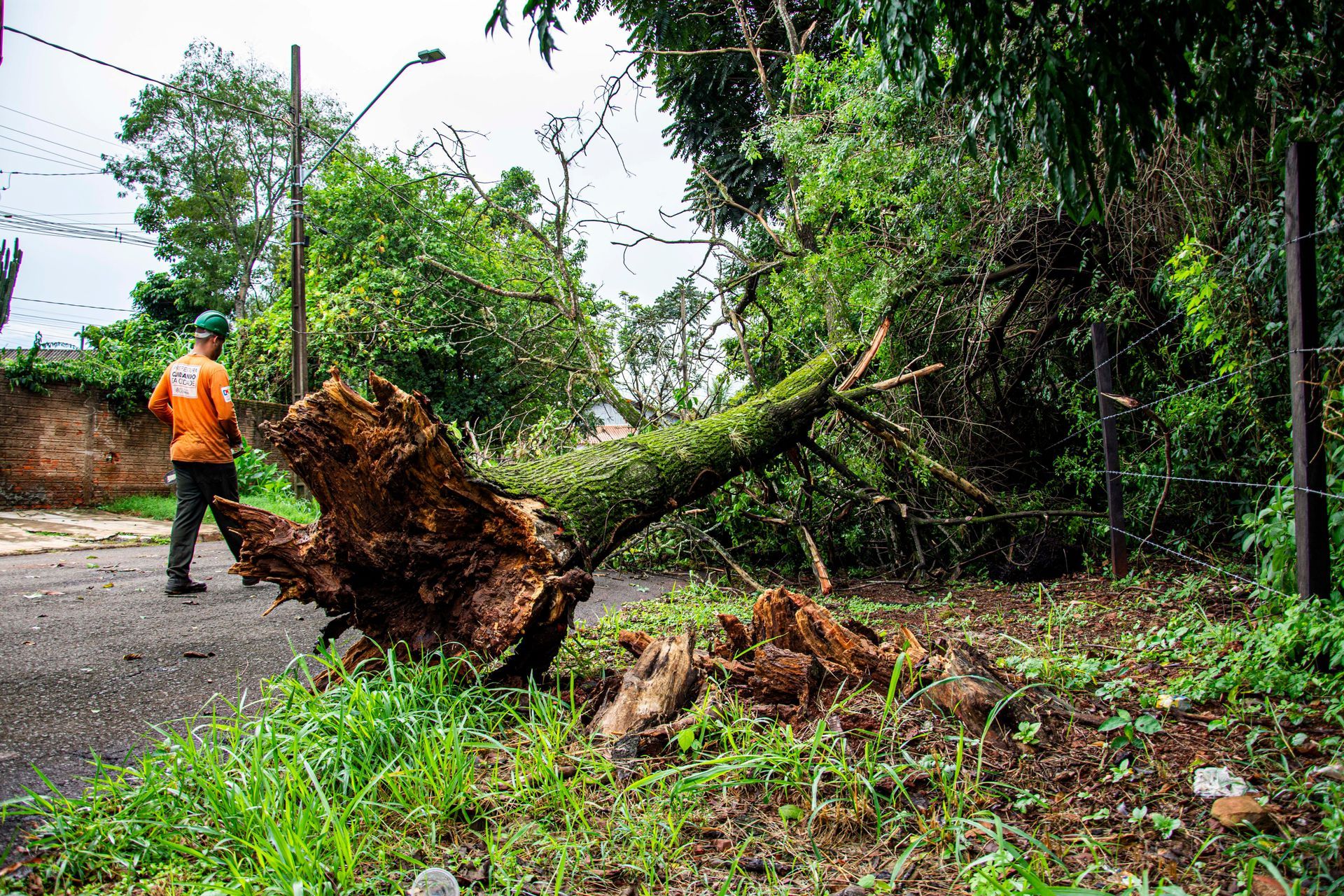
- Property damage during storms from falling limbs
- Service interruptions during bad weather or high winds
Even healthy trees can sway several feet during wind events, bringing branches dangerously close to energized lines. Dead trees pose an even greater threat, as weakened limbs are more likely to break and fall.
Who Is Responsible for Tree Removal Near Power Lines?
Responsibility depends on the type of power line and location of the tree:
1. Utility-Owned Power Lines (Main Service Lines)
If the tree is near a public utility line—the main overhead lines running along roads or through neighborhoods—the utility company is responsible for maintaining clearance. However:
- They may only trim enough to keep the line safe, not fully remove the tree
- They usually won’t remove healthy trees unless they pose an imminent risk
- You typically cannot remove the tree yourself if it is within 10 feet of high-voltage lines
In Michigan, DTE Energy and Consumers Energy are the two primary providers. Both companies have vegetation management programs and contract with certified arborists to maintain clearance.
2. Service Drops to a Home
If the line in question is the service drop (the wire running from the pole to your home), homeowners often bear more responsibility. However:
- You still should not trim trees within 10 feet of the line
- Utility companies may disconnect the line temporarily for safe work
- You’ll need to hire a licensed tree service trained to work near energized lines
3. Private Power Lines (On Large Properties or Farms)
On larger properties, power lines running between buildings or across land may be privately owned. In this case, the property owner is fully responsible for tree maintenance and removal—but the same safety rules still apply.
Can I Remove a Tree Near a Power Line Myself?
In most cases, no. It is illegal and highly dangerous to remove or trim any tree within close proximity to power lines if you are not trained and certified.
According to OSHA and Michigan safety standards:
- Homeowners and non-certified individuals must stay at least 10 feet away from any energized high-voltage line
- Only qualified line-clearance arborists can work closer than 10 feet
- Violating this rule can result in serious injury, death, or legal consequences
Even using a ladder or pole saw near a service line can be fatal. Electricity can arc from a power line to tools or wet branches without direct contact.
What Happens If a Tree Falls on a Power Line?
If a tree or limb falls on a power line:
- Stay away – Never attempt to move the limb yourself
- Call your utility company immediately
- Call 911 if the line is sparking or causing a fire
- Keep children, pets, and neighbors away from the area
The utility company will dispatch a crew to assess the situation. If the tree is on your property but caused public service disruption, the utility may bill for the response—especially if the tree was clearly dead or hazardous and ignored.
How Tree Removal Near Power Lines Works (Step-by-Step)
If a tree near a power line needs to be removed, here’s how the process typically goes:
Step 1: Assessment by a Certified Arborist
A qualified tree care professional will inspect the tree’s proximity to wires, determine what type of lines are involved, and evaluate the risk.
Step 2: Coordination with Utility Company
If the tree is within the utility clearance zone, the tree service will:
- Notify the utility provider (DTE or Consumers Energy)
- Request a temporary line shutdown, if needed
- Schedule removal based on clearance and line voltage
Some utility companies will assist by clearing the line zone, but they do not remove the entire tree unless it poses a system-wide hazard.
Step 3: Tree Removal by Qualified Professionals
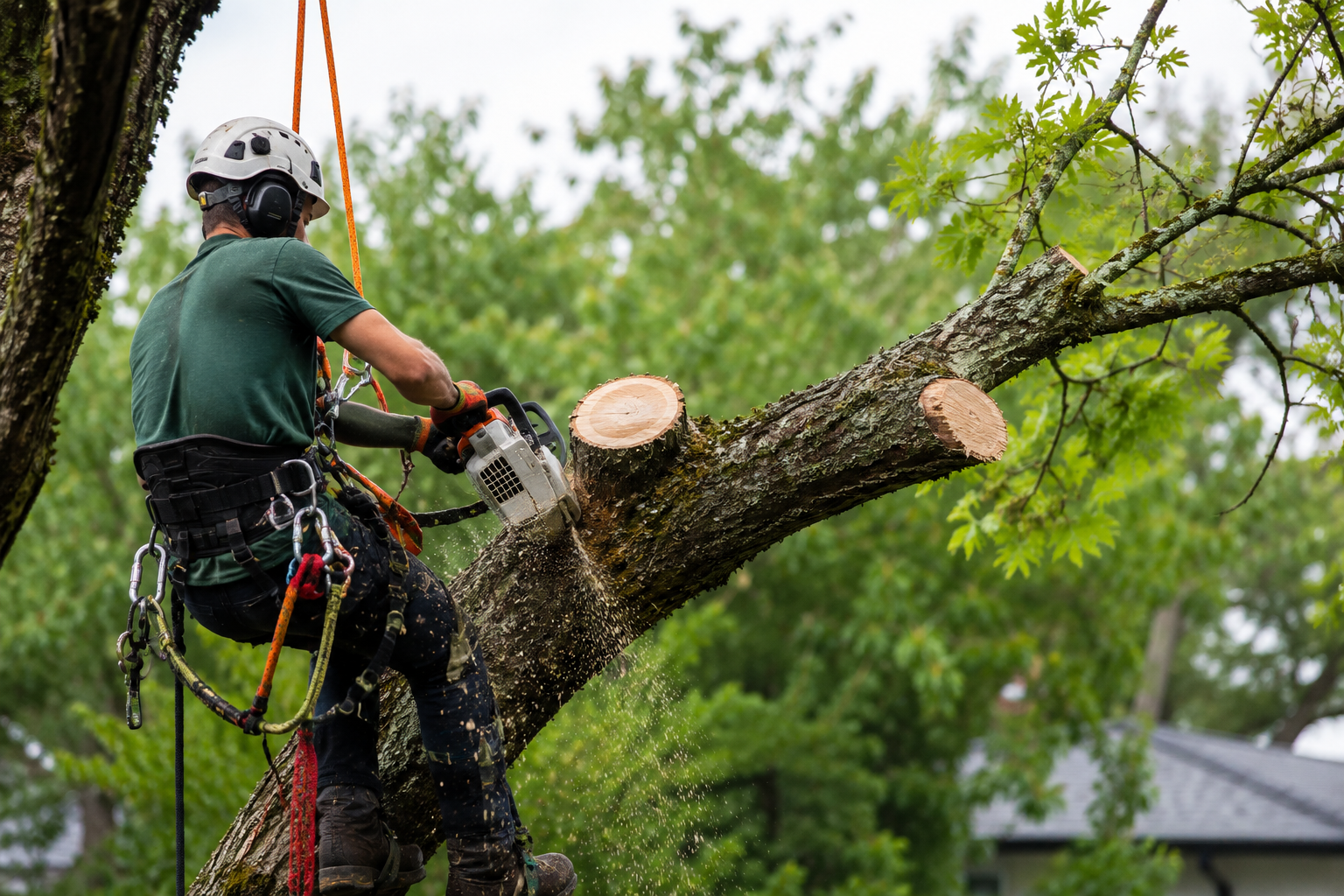
If work must occur within 10 feet of a power line, the crew must include:
- Line-clearance certified arborists
- Proper rigging and equipment
- Coordination with utility line workers
In many cases, the tree is removed in sections, starting at the top and carefully lowering limbs to avoid contact with wires.
Step 4: Cleanup and Stump Grinding (Optional)
Once the tree is down, the service may haul away debris or grind the stump if requested. Stump grinding is especially important if roots may interfere with underground utilities in the future.
Tips for Homeowners Dealing with Trees Near Power Lines
If you’re dealing with a tree growing too close to overhead lines, follow these tips:
- Never trim it yourself – even if it looks safe
- Call your utility company first if the lines are near public easements
- Hire a licensed and insured tree service for all private line work
- Document dead or storm-damaged trees near lines to avoid liability
- Monitor trees annually—especially fast-growing species like silver maple, willow, or poplar
Preventive maintenance is safer and cheaper than dealing with emergency outages or hazardous removals after a storm.
Common Tree Species That Interfere with Power Lines
Some trees are more likely to cause power line issues than others. Michigan property owners should be especially cautious with:
- Silver Maple – Grows quickly and has brittle limbs
- Willow – Spreads rapidly with large, heavy limbs
- Cottonwood/Poplar – Tall and unstable in wind
- Black Locust – Prone to falling during storms
- Boxelder – Weak wood and fast growth near structures
If any of these trees are near your utility lines, an annual inspection is highly recommended.
Safe Tree Planting Guidelines Near Power Lines
To avoid future problems, follow safe planting distances:
- Small trees (under 25 feet mature height): Plant at least 10 feet from lines
- Medium trees (25–40 feet): Plant 25–40 feet away
- Large trees (over 40 feet): Plant 50 feet or more away
Choose species that grow well in Michigan and are power-line friendly, such as:
- Serviceberry
- Dogwood
- Eastern redbud
- Crabapple
- Amur maple
Final Thoughts: Tree Removal Near Power Lines Requires the Right Partner
Removing or even trimming a tree near power lines is not a weekend DIY project. It requires training, coordination with utility providers, and professional-grade equipment to ensure safety and compliance with state laws.
At Family Tree Removal, we have the experience and certifications to safely handle tree removal near utility lines. We work closely with homeowners and power companies in Shelby Township and surrounding areas to deliver efficient, responsible service that protects both property and people.
If you have concerns about trees growing near your lines, don’t wait until a storm makes the problem worse. Reach out to a qualified tree service today to schedule an inspection and plan for safe removal.